







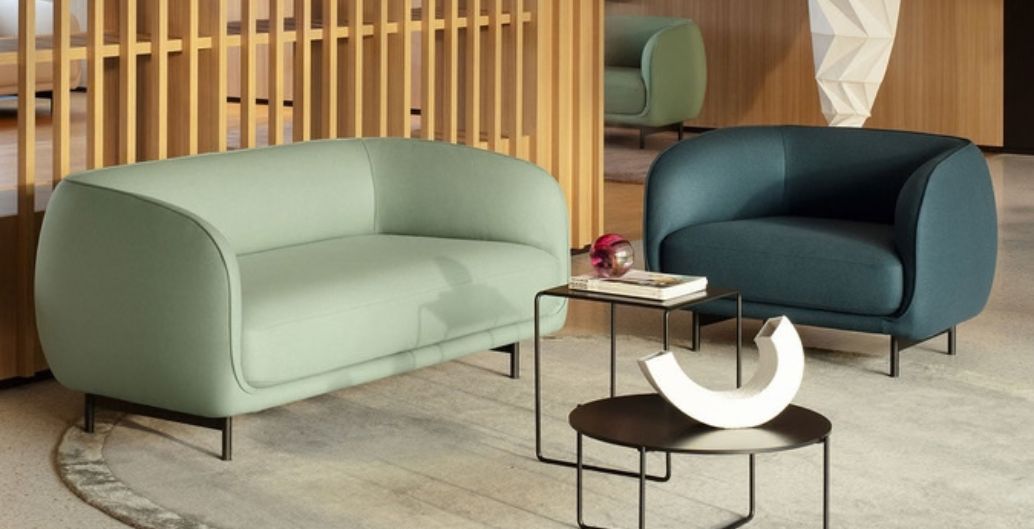
Il soft seating sta trasformando il modo di progettare gli spazi contemporanei, portando comfort e accoglienza dall'hospitality agli uffici, dal contract al residenziale. Scopri come sedute morbide, poltrone e lounge chair diventano veri strumenti progettuali attraverso le collezioni Milani Hull, Dada, Beth e Nordic Lounge.
Soft Seating: Why Soft Seating Is Taking Over Every Type of Space.
In contemporary spaces, comfort is no longer a secondary element. It has become an integral part of the design, alongside functionality, aesthetics, and the ability to create environments where people want to stay.
This is also why soft and upholstered seating is playing an increasingly central role in interior design. Armchairs, sofas, and lounge chairs are no longer limited to the domestic living area: they are entering offices, waiting rooms, hotel lobbies, restaurants, contract spaces, and common areas, helping to define atmospheres, functions, and ways of interacting.
The term soft seating captures precisely this evolution: a way of designing seating by bringing together comfort, hospitality, and the identity of a space.
For Milani, this vision is expressed through collections such as Hull, Dada, Beth, and Nordic Lounge, different in shape, proportions, and intended use, yet united by the desire to interpret comfort as part of the design.
What does soft seating mean?
Soft seating generally refers to armchairs, sofas, lounge chairs, and other upholstered seats designed to create areas dedicated to waiting, conversation, taking a break, or social interaction.
Unlike a conventional task chair, soft seating is not necessarily designed for prolonged workstation use. Its role is often to accompany more informal moments: a conversation in a hotel lobby, waiting at a reception desk, a quick meeting in the office, a break in a corporate lounge, or simply a moment of relaxation.
Softness, therefore, is not just about padding. It is a quality that involves the overall perception of a space: rounded shapes, welcoming volumes, pleasant-to-the-touch materials, and configurations that invite people to stay.
In this sense, upholstered chairs, soft armchairs, and upholstered sofas can become genuine design tools. They can visually define a function without creating walls, make a circulation area more dynamic, or introduce a distinctive element into an environment.
From hospitality to the office: soft seating is transversal.
One of the reasons soft seating is so widespread in contemporary projects is its ability to adapt to very different contexts.
In hospitality, a soft armchair can help make a lobby or lounge more welcoming. In contract projects, sofas and upholstered seating help organize common areas, waiting areas, and social spaces. In offices, lounge chairs and armchairs can create alternatives to the traditional workstation, dedicated to informal meetings, phone calls, or breaks.
Residential spaces have also expanded the role of soft seating: sofas and armchairs are no longer necessarily concentrated exclusively in the living area, but can also be introduced into home offices, bedrooms, entrances, and circulation spaces.
The result is greater fluidity between functions and environments. The same idea of comfort can take different forms depending on the context.
Soft seating as a tool for designing space.
Choosing an upholstered seat therefore means considering not only the shape of the product, but also the relationship it will establish with its surroundings.
Proportions, materials, colors, bases, and upholstery all help define the presence of the seat within the project. A compact armchair can create a small conversation corner; a sofa can define a lounge area; a lounge chair can introduce a more intimate zone within an open-plan environment.
Upholstery also plays an important role. Fabrics and leather can change the visual and tactile perception of the product, while the option to choose from different finishes makes it possible to coordinate the seating with other interior elements.
Soft seating thus becomes part of a broader composition, interacting with side tables, lighting, architectural materials, and other furnishings.
Four interpretations of comfort according to Milani.
The variety of contemporary spaces calls for equally diverse solutions. Hull, Dada, Beth, and Nordic Lounge show four different ways of interpreting the world of soft seating.
Hull, soft and embracing seating.
Designed by Skrivo, Hull is inspired by the enveloping shape of a hull. Like a boat, the seat encloses and protects, creating a welcoming feeling through generous volumes and balanced proportions.
The contrast with the slim steel legs makes the structure visually light, while the fabric edge introduces a handcrafted detail that recalls Milani’s manufacturing identity.
Available as an armchair and a two-seater armchair, Hull naturally fits into lounges, reception areas, waiting areas, and hospitality spaces, but it can also be used in residential settings where comfort needs to be combined with a distinctive presence.
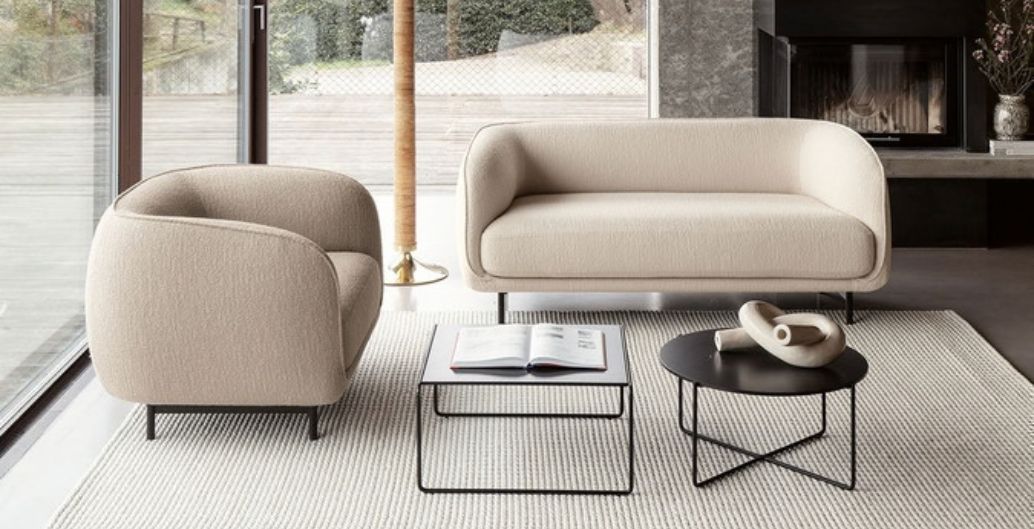
Dada, the more dynamic side of soft seating.
Designed by Meneghello Paolelli, Dada gives comfort a more playful and dynamic character.
Generous, inclined armrests and backrests interact with a seat that seems almost suspended above the slim structure. The result is a collection capable of bringing personality to both living spaces and high-end contract projects.
The family includes an armchair, a two-seater sofa, and a three-seater sofa, offering different configuration options. The polyurethane-upholstered structure and steel legs, available in 11 finishes, also make it possible to explore the relationship between soft volumes and more essential details.
Dada is designed for environments where seating should not simply occupy space, but contribute to its identity: halls, lounges, waiting areas, and spaces dedicated to conversation.
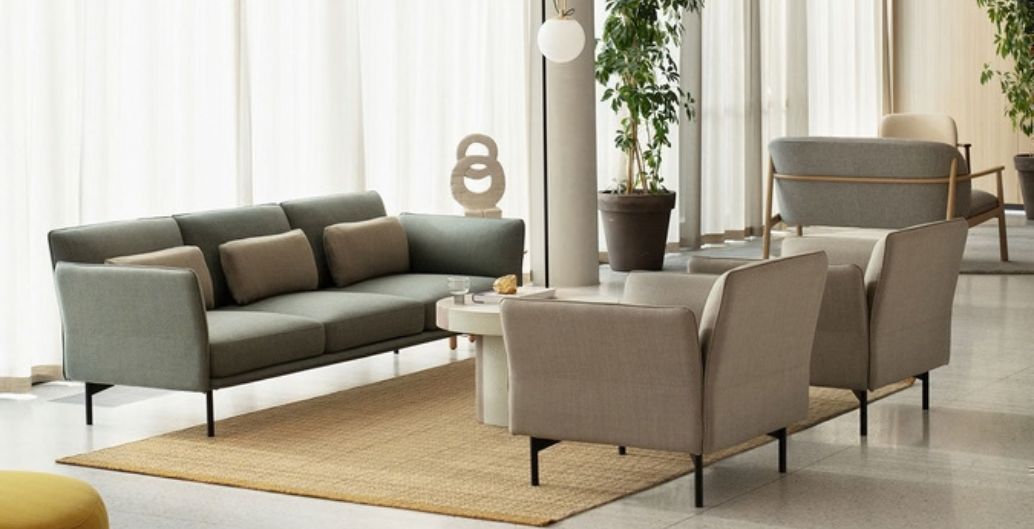
Beth, soft shapes and customization options.
Designed by Alessandro Crosera and Elena Pistolato, Beth interprets soft seating through a study of proportions.
The collection reinterprets small armchairs, compact sofas, and lounge seating through varying thicknesses and rounded lines, creating welcoming yet measured forms.
One of Beth’s distinctive features is the choice of different wooden or metal bases, depending on the desired aesthetic and function. The collection includes armchairs, two-seater sofas, and lounge versions, with different base configurations.
This variety makes Beth particularly suitable for projects where seating needs to change character depending on the environment: from offices to hospitality, from lounge areas to residential spaces.
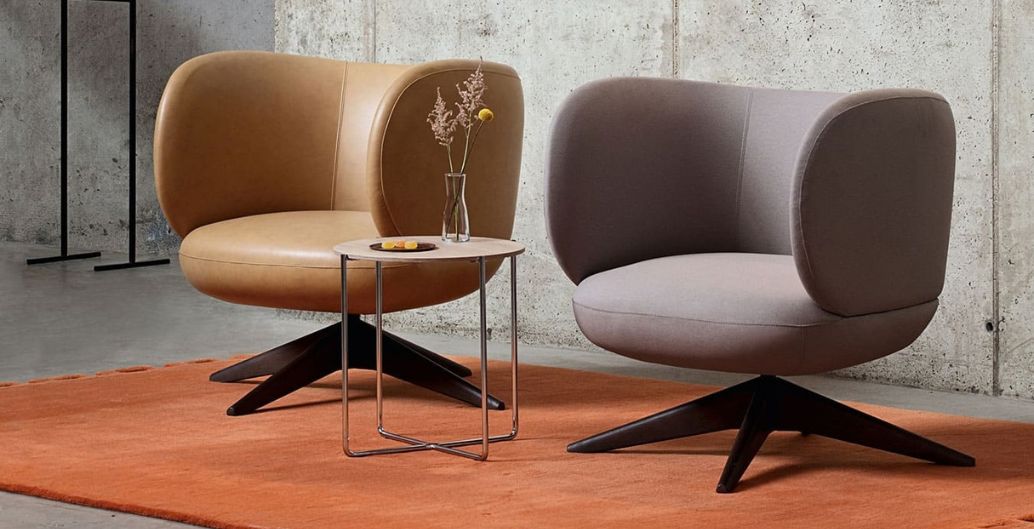
Nordic Lounge, where comfort meets ergonomics.
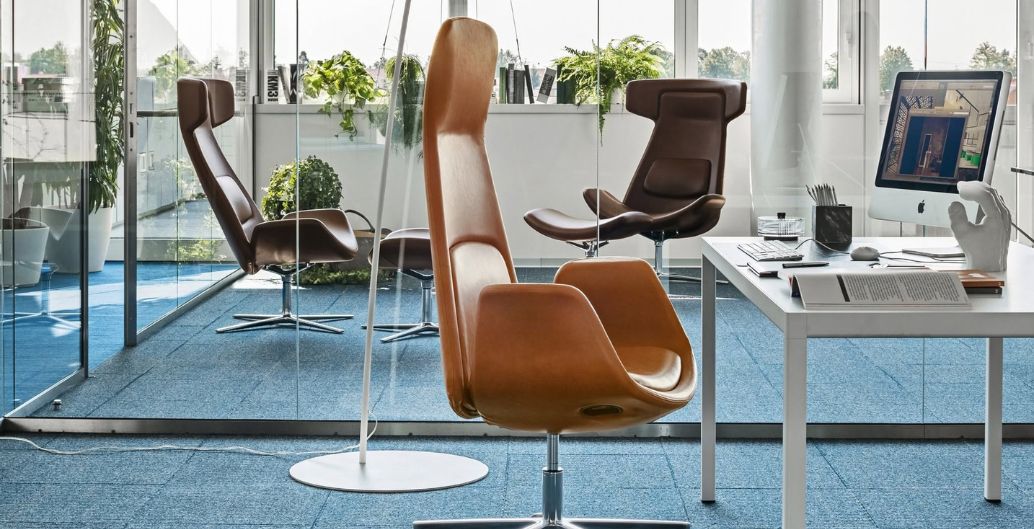
The Nordic Lounge collection, designed by Baldanzi & Novelli, brings the concept of soft seating into a more executive dimension.
The distinctive curved seat and the proportions of the armchair create an elegant and welcoming presence, while leather or fabric upholstery allows for different colors and finishes.
The collection is available in different heights and can incorporate a synchronized mechanism into the shell. The addition of a footrest further expands its range of uses, transforming the seat into a true lounge area.
For this reason, Nordic Lounge is suited to executive offices as well as hospitality settings and areas dedicated to waiting and conversation.
Four collections, one shared idea of space.
Hull, Dada, Beth, and Nordic Lounge are not four variations of the same product. Each interprets the relationship between body, space, and comfort through a specific language.
Hull focuses on hospitality and an enveloping form. Dada introduces dynamism and personality. Beth plays with proportions, softness, and configuration options. Nordic Lounge, meanwhile, brings comfort into a more lounge-oriented and executive dimension.
This variety reflects a broader change in the way interiors are designed: there is no longer a single type of space, just as there is no longer a single idea of comfort.
An office can have a lounge area. A hotel can have informal workspaces. A home can include a conversation area separate from the living room. A reception area can also become a place for waiting and interaction.
Soft seating fits precisely into this overlap of functions, helping to make environments more flexible and legible.
Soft seating in Milani’s PLACES vision.
This is also where the PLACES vision comes in, Milani’s catalogue dedicated to spaces and the different ways of inhabiting contemporary environments.
Rather than focusing on individual products, PLACES looks at environments as systems in which furnishings, people, and functions interact. Comfort therefore becomes a component of the overall design, capable of supporting different moments and adapting to constantly evolving contexts.
Soft seating embodies this philosophy particularly well. An armchair or sofa does not simply define a place to sit: it can create a zone, suggest a behavior, provide a pause, encourage conversation, or contribute to the atmosphere of an environment.
It is a conception of contemporary space in which office, hospitality, contract, and residential settings are no longer completely separate worlds, but share needs, languages, and ways of use.
How to choose soft seating for a project.
Choosing the most suitable seating therefore starts with the context. Before selecting a model, it is useful to ask how the space will be used.
In a waiting room, hospitality, proportions, and ease of integration into the layout may be important. In an executive office, a lounge seat designed for conversations and informal meetings may be needed. In a hospitality project, on the other hand, seating can become part of the guest’s overall experience.
Materials and finishes should also be assessed in relation to the intended use, traffic, and maintenance requirements, together with the available dimensions and the relationship with other furnishings.
There is therefore no universally perfect soft seat: there is the one that is most consistent with the function, architecture, and identity of the project.
Soft seating: a trend that goes beyond fashion.
The success of soft seating reflects an evolution in the way we experience spaces. Comfort has become a design component capable of influencing not only how an environment is perceived, but also how people use it.
From hospitality to contract, from offices to residential spaces, armchairs, sofas, and lounge chairs make it possible to introduce softness, hospitality, and flexibility into very different contexts.
With Hull, Dada, Beth, and Nordic Lounge, Milani interprets this trend through collections that differ in language, proportions, and functionality, yet are united by the same focus on the relationship between design, comfort, and space.
Discover the PLACES catalogue and Milani collections to find the solution best suited to your project.